Conceptual eco-artist | Educator | Seeker | Storyteller reclaiming materials and meaning
Artist Statement
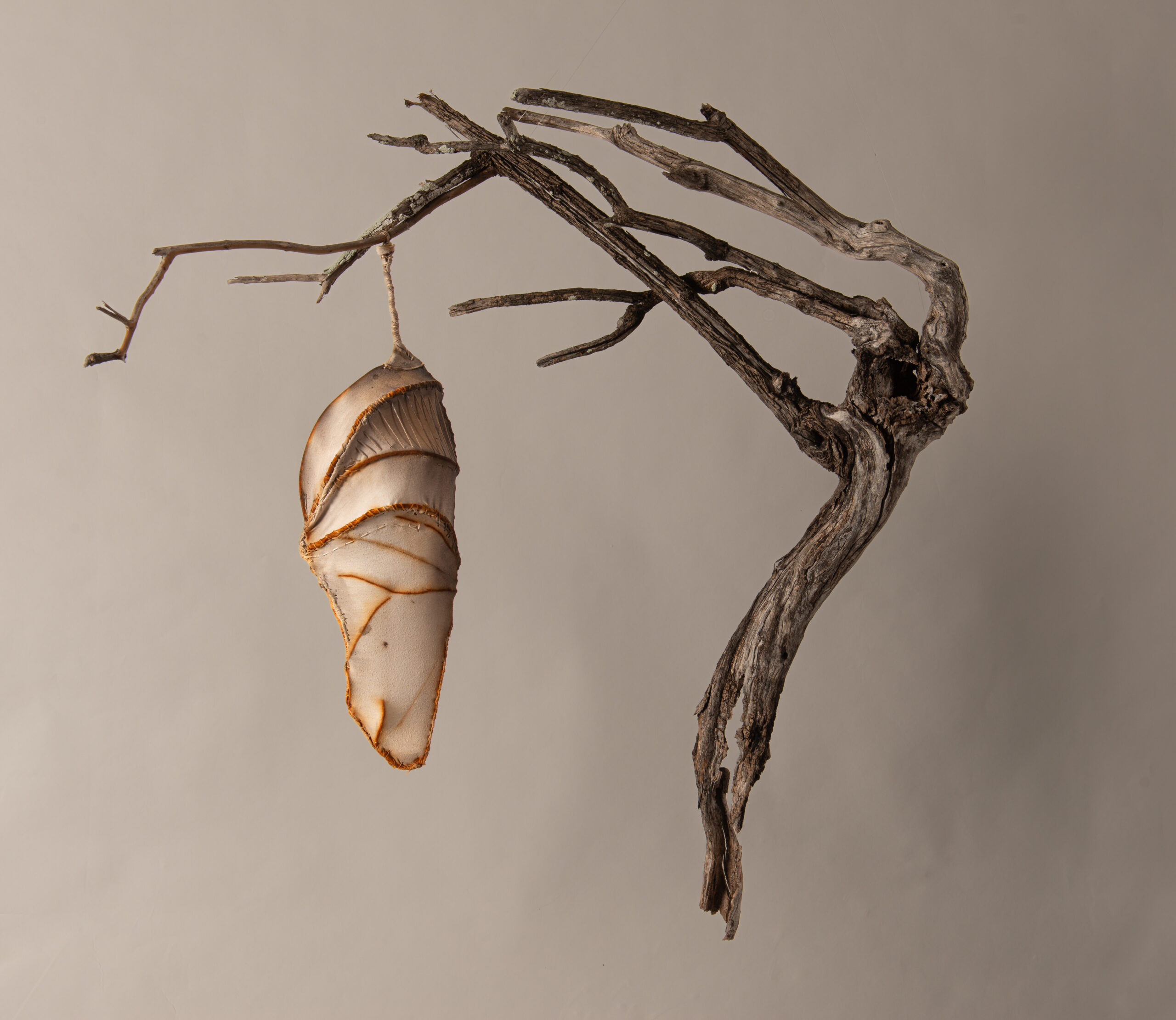
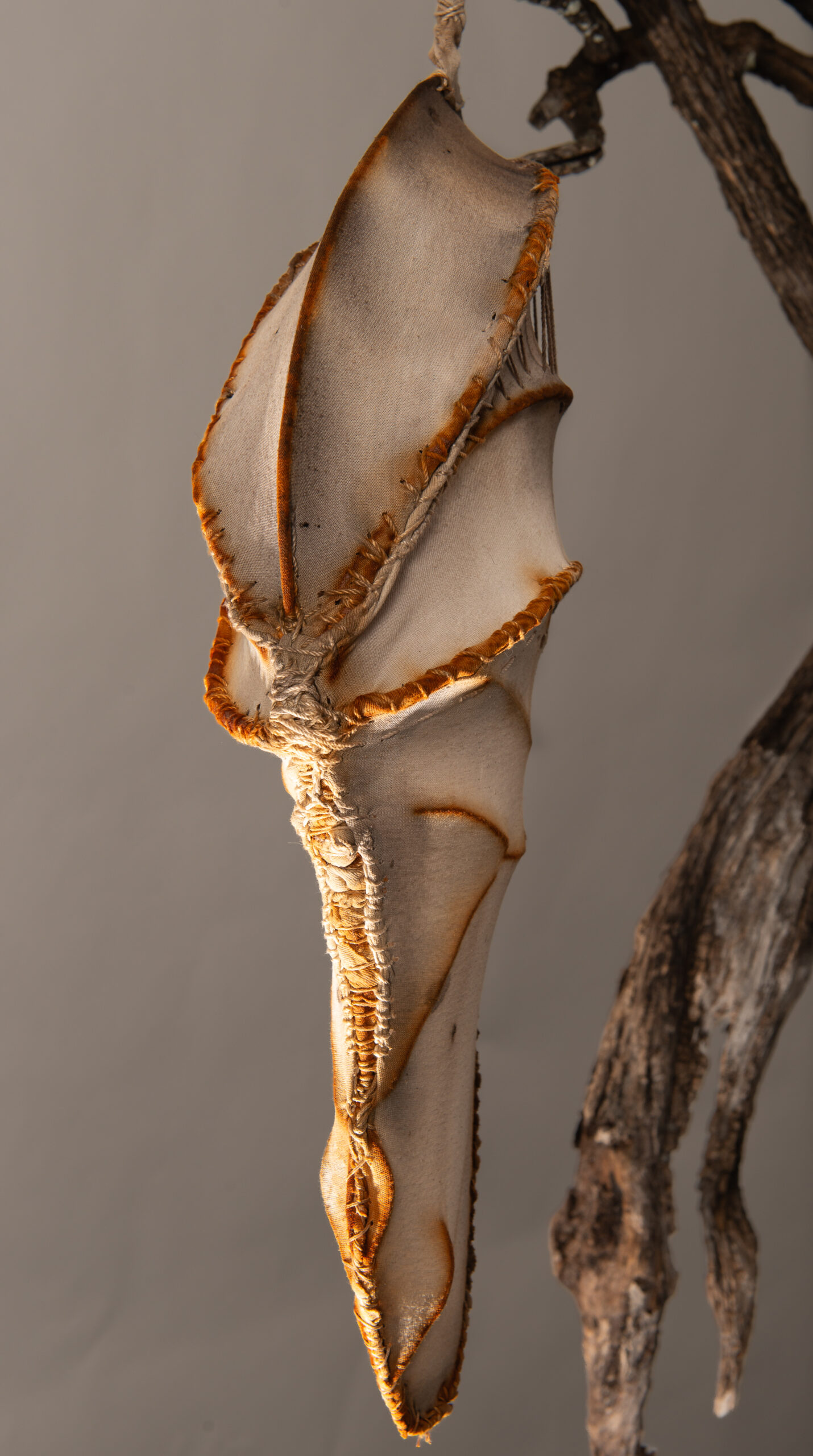
I work with what’s been discarded—hurricane debris, salvaged thread, rusted metal, and cloth that carries the memory of other lives. These materials arrive scarred, stained, incomplete. I’m drawn to them precisely because they resist the fantasy of perfection. My practice is a study of what endures when we stop trying to erase damage.
Raised Afrikaans on a subsistence farm, I learned that repair is not optional—it’s how you survive. Mending was inheritance, part of a lineage of women who made beauty from scarcity and learned resourcefulness from necessity. That ethic shapes my work now: I reconstruct forms that mimic forest strata, mycorrhizal networks, wounded skin. I stitch, felt, coil, and bind—gestures borrowed equally from surgery and ritual, domestic labor and rebellion.
The work asks whether something broken can also be sacred. Whether renewal is possible inside systems built for extraction. Whether the body—mine, yours, the earth’s—can remember tenderness even after violence.
Felting becomes metaphor: fibers coaxed, then coerced into permanence through friction and force. Wool transforms under pressure the way trauma changes the psyche—irreversibly altering structure. Stitches map the labor of holding together. Rust stains track the slow passage of time. Each piece is both elegy and evidence: something was destroyed here, and something else grew back.
I’m interested in the gap between presentation and truth—the way we frame suffering to make it bearable, the decorative impulse that both honors and obscures pain. In Secondhand Account, an ornate Rococo frame contains felted wool marked with open wounds, creating friction between civility’s veneer and the rawness it’s meant to contain. Reclamation celebrates root forms spreading across deteriorating structures, suggesting that nature doesn’t wait for permission to return. These are not metaphors for healing so much as investigations of what healing costs, and whether it’s ever complete.
My work participates in broader conversations about ecological grief, inherited trauma, and the ethics of making in a culture that equates consumption with worth. I’m in dialogue with artists like Eva Hesse and Louise Bourgeois, who understood that the body is always the subject, even when it’s absent. With ecofeminism’s insistence that exploitation of land and exploitation of bodies are the same wound. With the Daoist understanding that all tings are in constant transformation and that both yielding and force are each seeds of the other.
I create because it’s how I metabolize being alive—how I transmute rage and tenderness into something I can hold. The work is personal, but not confessional. Intimate, but not sentimental. It resists easy comfort. It asks you to sit with the unresolved, the imperfect, the still-breaking-open. It insists that repair is not about returning to what was, but about building something new from what remains.
Interested in my work?
Let’s start a conversation.
I’m available for exhibitions, artist talks, writing, and teaching opportunities.